Main Content
Gain practical, real-world strategies to compete more effectively for funding and the tools needed to succeed at every stage of the grant lifecycle.

Jump to: Register | Course Details | Overview | Instructor | Reviews | CE Credits | Policies | Contact Us | Related Courses | Join Email List
Register Now
Pay with Credit Card:
Pay with Check, PO, or Money Order:
Course Details
Course Name: Mastering the Grant Lifecycle
Session 1 – Grant Funding Strategies Dates: October 13, 20, and 27, 2026
Session 2 – Grant Writing Skills Dates: February 23, March 2, and 9, 2027
Session 3 – Grant Management and Compliance Dates: May 4, 11, and 18, 2027
Attend any combination of sessions to meet your needs—one, two, or all three sessions!
Time: 12:00 pm – 1:30 pm Eastern
Location: Online
Format: Live, instructor-led
Registration Fee: $375 per person per session ($1,125 for all 3 sessions)
Paying with a check, money order, or purchase order?
Payments should be made out to: Rutgers, The State University of New Jersey
Checks and money orders should be mailed to: Office of Continuing Professional Education, Attn: Registration Dept., 102 Ryders Ln, New Brunswick, NJ 08901-8519
Purchase Orders can be mailed to the address above or electronically sent to registration@njaes.rutgers.edu.
Course Overview
This Rutgers Mastering the Grant Lifecycle course is a comprehensive professional development program designed for grant writers, program managers, finance professionals, nonprofit executives, and development staff seeking to strengthen their organization’s grant success.
Nine modules will be held over three sessions from October through May, giving participants nearly year-round access to expert-led training. Attendees will gain practical, real-world strategies to compete more effectively for funding, manage grants with confidence, reduce compliance and financial risk, and demonstrate measurable impact to funders and stakeholders.
Whether you are developing a competitive proposal, managing multiple awards, navigating grant modifications, or documenting outcomes, this series provides the knowledge and tools needed to succeed at every stage of the grant lifecycle.
The sessions are scheduled as follows. Attend one session, two sessions, or all three!
SESSION 1: Grant Funding Strategy – October 13, 20, and 27, 2026
Course Status Notice – Not Scheduled
We do not have an offering of this course scheduled at this time. Please join our email list to be notified when the next offering is scheduled!
Grant Funding Strategy
Successful grants require more than strong writing. They demand strategic planning, sound financial management, effective stewardship, and measurable results.
Date of Most Recent Offering: October 13, 20, and 27, 2026
Time: 12:00 pm – 1:30 pm EDT (Log-in time: 11:50 am EDT)
Course Code: BC0197WA27
Registration Closes: October 11, 2026

Module 1 – Determining the Need: Defining Your Funding Priorities and Finding the Right Opportunities (October 13, 2026)
Successful grant seeking begins long before writing a proposal. This session helps participants identify organizational priorities, define funding needs, and align projects with strategic goals. Participants will learn how to assess organizational readiness, identify appropriate funding sources, and develop an efficient approach to researching public and private grant opportunities.
Module 2 – Charting Your Course – Creating a Strategic Response (October 20, 2026)
With an unpredictable landscape, organizations have an opportunity to be proactive and develop strategies to respond to unforeseen challenges. This session will discuss organizational alignment for a strategic response, a review of compliance and reporting practices, cash-flow survival, components of contingency plans, and how to stay compliant with current federal regulations.
Module 3 – Moving Forward: Choosing the Right Funding Opportunities (October 27, 2026)
Not every funding opportunity is the right opportunity. This session explores how to evaluate grant opportunities based on organizational mission, capacity, competitiveness, sustainability, and funder expectations. Participants will learn practical decision-making strategies to prioritize opportunities with the greatest likelihood of success while avoiding grants that may create unnecessary administrative or financial burden.
SESSION 2: Grant Writing Skills – February 23, March 2, and 9, 2027
Grant Writing Skills
Improve your grant writing skills by learning to build a stronger, competitive proposal and developing a clear budget narrative.
Date: February 23, March 2, and 9, 2027
Time: 12:00 pm – 1:30 pm EST (Log-in time: 11:50 am EST)
Course Code: BC0197WB27
Registration Closes: February 21, 2027
Register Now
Pay with Credit Card:
Pay with Check, PO, or Money Order:
Module 1 – Improving Your Grant Writing Skills (February 23, 2027)
No matter what field you are in, the hunt to secure any type of grant funding has become highly competitive. Preparing a competitive grant proposal requires good research, careful preparation, and smooth writing. Through lessons and real-life examples, learn strategies and tools to help you research, prepare, and write grant applications that will give you an edge and put you on the road to funding.
Module 2 – Building Stronger Grant Applications: A Reviewer’s Perspective (March 2, 2027)
Even a well-written, impactful application can be rejected if it does not clearly support the stated purpose of the funding opportunity. Learn to apply strategies to strengthen clarity, alignment and credibility in your submission. This session helps you to understand how reviewers assess and score grant applications, identify weaknesses that lead to rejection, and recognize early red flags reviewers notice during initial review.
Module 3 – How to Justify Costs Clearly, Defensibly, and Persuasively (March 9, 2027)
A clear budget narrative can make or break a proposal. This session focuses on what funders expect when reviewing costs and how to align budgets with program activities. Participants will learn how to anticipate reviewer questions and strengthen justifications that support funding decisions.
SESSION 3: Grant Management and Compliance – May 4, 11, and 18, 2027
Grant Management and Compliance
What do you do once you have received your award? Learn how to manage the awards, navigate grant modifications, and document outcomes effectively.
Date: May 4, 11, and 18, 2027
Time: 12:00 pm – 1:30 pm EDT (Log-in time: 11:50 am EDT)
Course Code: BC0197WC27
Registration Closes: May 2, 2027
Register Now
Pay with Credit Card:
Pay with Check, PO, or Money Order:
Module 1 – Strategic Grant Management: Navigating Changes and Mitigating Risks (May 4, 2027)
Current times are unpredictable therefore it is essential to develop new strategies related to grant management and responding to unforeseen challenges. It may be necessary to augment the scope of work, timeline, or budget. This course is designed to help participants learn how to navigate the relationship with the sponsor and engage effectively in the change process and ensure project success. Additionally, attendees will discuss the importance of internal controls to provide direction for the management of sponsored projects, using an internal control framework that limits the potential for liability, and learn how to make informed decisions about allocating resources and critical priorities to better maintain compliance, financial stability and flexibility due to federal disruptions, and resources.
Module 2 – Grant Amendments, Extensions, and Budget Revisions (May 11, 2027)
Change happens even after an award is made. This session explains when funder approval is required, how to distinguish minor adjustments from formal amendments, and best practices for requesting extensions or budget revisions. Participants will learn how to communicate changes clearly while maintaining funder confidence.
Module 3 – Best Practices for Documenting Grant Impact and Success (May 18, 2027)
Funders want to see the impact of their funding before, during, and after the proposal and funding cycle. This course is designed to help participants effectively document and share their project impact.
Who Should Attend?
This course is a great source of information for anyone involved in grant writing and securing funding, including those who work for nonprofits, municipalities, corporations, higher education and any organization that relies on grants for financial stability. It is designed to accommodate everyone, regardless of experience, and all are welcome.
Meet Your Instructor
Elaine Griffin, Rutgers University
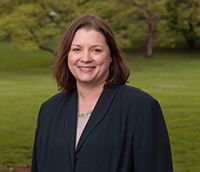
Elaine Griffin is the Associate Director of Grants Facilitation of the SEBS and NJAES Office of Research. Over the last ten years, she has served the Office as both a Manager of Compliance and Quality Control (4 years) and a Research Grant and Contract Specialist (6 years). In these roles, Elaine provided training and troubleshooting in all aspects of grant facilitation, including contract review, guidance on budget development, external and internal documentation, post-award spending, coordination of workflow, implementation of programs, and effective documentation of impact. Elaine’s work portfolio includes over 20 years of experience securing money for academic and non-profit environments. She has written and contributed to many successful funding proposals in the areas of public health, family health sciences, 4-H, nutritional sciences, food policy, multicultural programming, agricultural resources, and environmental sciences. She has also delivered and designed educational programs to community groups seeking grant funding through the Office of Continuing and Professional Education.
Continuing Education Credits
Each of the three sessions of Mastering the Grant Lifecycle course is approved for 0.4 Rutgers CEUs (4.5 contact hours) as well as the following credits from professional organizations.
 New Jersey
NJ Certified County Finance Officer (CCFO): 4.5 Office Management & Ancillary Contact Hours
NJ Certified Municipal Financial Officer (CMFO): 4.5 Office Management & Ancillary Contact Hours
NJ Certified Public Works Managers (CPWM): 4.5 Management Contact Hours
NJ Certified Tax Collector (CTC): 4.5 General/Secondary Contact Hours
NJ Health Officers and Registered Environmental Health Specialists (HO/REHS): Rutgers University, NJAES, Office of Continuing Professional Education has been approved by the New Jersey Department of Health as a provider of NJ Public Health Continuing Education Contact Hours (CEs). Participants who complete this education program will be awarded 4.5 NJ Public Health Continuing Education Contact Hours (CEs).
NJ Qualified Purchasing Agent (QPA): 4.5 Office Admin/General Duties Contact Hours
NJ Registered Municipal Clerk (RMC): 4.5 Professional Development Contact Hours
Course Requirements and Policies
 Technology Requirements
This online course will be delivered via Zoom in real time.
Equipment you will need to access this training:
- A laptop, desktop computer, tablet, or smartphone that will support Zoom is required for this class.
- Cameras are not required but are recommended for class participation and engagement.
- Speakers and a microphone are not required but highly recommended; a call in option is also available for audio.
- High speed internet or Wi-Fi connection is required.
You will receive an email from the Program Coordinator with your Zoom link the day before class. Preregistration on Zoom is required. Participants should log in at least 10 minutes prior to class start time (i.e., 11:50 am Eastern).
 Email Requirement
A unique email address is required for each registrant to register and access our courses.
- If this is your first time registering with us, please provide your own unique email address when registering; do not provide an email address that you share with co-workers.
- If you have previously taken classes with us and have used an email address that you share with your co-workers or supervisor, your account must be updated with a unique email address. To do this, please send an email to us at registration@njaes.rutgers.edu stating that your email address needs to be changed and include:
- Your full name
- The shared email address that needs to be changed
- Your unique email address
- A phone number where you can be reached if we have any questions
 Cancellations and Substitutions
A $100 cancellation fee applies for this course. No substitutions are permitted. View our cancellation policy.
Program Questions? We’re Here to Help!
If you have any questions about Mastering the Grant Lifecycle, please don’t hesitate to reach out to us.

Program Coordinator: Olga Welsh
848-932-7315
olga.welsh@rutgers.edu
For registration assistance, please contact our Registration Department at 848-932-9271, option 2 or email registration@njaes.rutgers.edu.